

Choosing the right 3D printer is no longer just about price or build volume. Today’s users expect speed, reliability, material flexibility, and minimal setup friction—especially as desktop 3D printing becomes a serious tool for design, engineering, and small-scale production. Against this backdrop, the Bambu Lab P1S has quickly gained attention.
But popularity alone doesn’t answer the most important question:
Who should actually buy the Bambu Lab P1S?
This article provides a practical, experience-driven breakdown of the ideal users, real-world applications, and scenarios where the P1S truly makes sense—and where it might not. Rather than repeating specs, we’ll focus on use cases, user profiles, workflow demands, and long-term value, helping you decide whether this printer fits your needs.
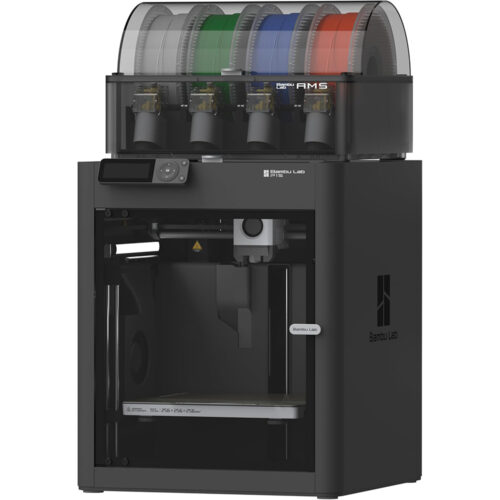
Bambu Lab P1s 3d Printer Reviews
Table of Contents
- Understanding the Bambu Lab P1S Positioning
- What Type of 3D Printer Is the Bambu Lab P1S?
- Who the Bambu Lab P1S Is Designed For
- Hobbyists and Serious Makers
- Designers and Engineers
- Small Businesses and Startups
- Educators and Students
- Users Upgrading from Entry-Level Printers
- Users Who Value Speed and Automation
- Material-Focused Users
- Who the Bambu Lab P1S Is NOT Ideal For
- Long-Term Ownership Considerations
- Value vs. Cost: Is It Worth Buying?
- Final Verdict: Who Should Buy the Bambu Lab P1S
- FAQs
1. Understanding the Bambu Lab P1S Positioning
The Bambu Lab P1S occupies a very specific space in the 3D printer market. It sits between entry-level hobby machines and high-end professional systems, offering advanced automation and speed without requiring enterprise-level budgets.
Rather than targeting absolute beginners or industrial users, the P1S is designed for users who want consistent results with minimal tuning, while still maintaining access to advanced materials and fast iteration cycles.
This positioning is critical to understanding who benefits most from owning one.
2. What Type of 3D Printer Is the Bambu Lab P1S?
Before deciding who should buy it, it’s important to clarify what kind of machine the P1S actually is.
At its core, the Bambu Lab P1S is:
- A high-speed CoreXY 3D printer
- Fully enclosed, suitable for engineering materials
- Designed for automation-first workflows
- Optimized for repeatability and reliability
- Built for users who print frequently, not occasionally
This is not a “tinkering-first” printer. It’s a tool-first printer.
If you enjoy constantly modifying hardware, swapping custom firmware, or experimenting with exotic mechanical upgrades, this may not be your ideal platform. But if you want prints to succeed without constant adjustment, the P1S aligns well with that goal.
3. Who the Bambu Lab P1S Is Designed For
Broadly speaking, the Bambu Lab P1S is best suited for:
- Users who print often
- Users who care about time efficiency
- Users who want stable performance across materials
- Users upgrading from basic machines
- Users who want professional-grade results without professional-grade complexity
Let’s break these groups down in detail.
4. Hobbyists and Serious Makers
Ideal for Dedicated Hobbyists
Not all hobbyists are beginners. Many experienced makers outgrow entry-level printers after encountering limitations like:
- Slow print speeds
- Frequent failed prints
- Poor ABS or ASA performance
- Constant manual calibration
For serious hobbyists who treat 3D printing as a long-term passion rather than a casual experiment, the Bambu Lab P1S offers a meaningful upgrade.
Why It Works for Hobbyists
- Faster iteration allows more creative experimentation
- Enclosure enables stronger, more durable materials
- Automation reduces maintenance fatigue
- High consistency builds confidence in complex projects
For makers who value making over tinkering, the P1S allows more time spent designing and printing rather than fixing issues.
5. Designers and Engineers
Built for Design Workflows
Designers and engineers often care less about novelty and more about predictability. When you design a part, you expect it to print correctly the first time—or close to it.
The Bambu Lab P1S suits this workflow extremely well.
Key Benefits for Designers
- Reliable dimensional accuracy
- Stable performance with functional materials
- Rapid iteration cycles for prototypes
- Enclosure for heat-sensitive filaments
If your workflow involves CAD → print → test → revise, speed and consistency matter far more than customization.
Many users evaluating this printer explore detailed performance insights through a Bambu Lab P1S Review to understand how it handles real-world design demands over long print cycles.
Bambu Lab P1s 3d Printer Reviews
6. Small Businesses and Startups
A Practical Tool for Small-Scale Production
For small businesses, downtime equals lost money. Whether you’re producing jigs, fixtures, enclosures, or customer-facing parts, reliability matters more than novelty.
The Bambu Lab P1S fits well into:
- Small product development teams
- Etsy or custom product businesses
- Repair shops and service providers
- Startups needing in-house prototyping
Why Small Businesses Choose the P1S
- Minimal setup time
- Consistent print quality across batches
- Fast turnaround for customer requests
- Lower total cost compared to industrial machines
For businesses that need repeatable output without hiring a full-time technician, the P1S offers strong value.
7. Educators and Students
Suitable for Advanced Learning Environments
While the P1S may not be ideal for absolute beginners, it performs well in educational settings where students are learning:
- Product design
- Engineering fundamentals
- Material science
- Rapid prototyping workflows
Benefits in Education
- Reduced maintenance for instructors
- Faster print queues
- Enclosure improves safety and material compatibility
- Professional-level workflow exposure
For institutions aiming to teach industry-relevant skills, the P1S aligns better than many basic classroom printers.
8. Users Upgrading from Entry-Level Printers
A Logical Next Step
Many users come to the Bambu Lab P1S after using printers like:
- Open-frame Cartesian printers
- Entry-level bedslingers
- DIY or kit-based machines
If you’ve experienced frustration with constant tuning, bed leveling issues, or slow speeds, the P1S feels like a generational leap.
Why the Upgrade Makes Sense
- Dramatically reduced manual adjustments
- Better material support
- Faster prints without sacrificing quality
- More confidence in long prints
For users ready to move from “learning the printer” to “using the printer,” the P1S is a strong candidate.
9. Users Who Value Speed and Automation
Time Is the Real Cost
Many buyers underestimate how much time they spend babysitting prints. The Bambu Lab P1S is built to minimize this.
Automation Advantages
- Automated calibration
- Stable thermal environment
- Predictable results across prints
- Less trial-and-error
If your goal is to maximize output per hour, the P1S outperforms many similarly priced machines.
10. Material-Focused Users
Designed for More Than PLA
While PLA printing is easy on almost any machine, the real test of a printer is how it handles:
- ABS
- ASA
- PETG
- Functional blends
The P1S enclosure provides the thermal stability needed for these materials without extensive modification.
Who Benefits Most
- Users printing functional parts
- Outdoor or heat-resistant applications
- Mechanical or load-bearing designs
If material versatility matters to your projects, the P1S offers meaningful advantages.
11. Who the Bambu Lab P1S Is NOT Ideal For
No printer is perfect for everyone.
The P1S may not be the best choice if you:
- Only print occasionally
- Want the cheapest possible option
- Enjoy extensive hardware modification
- Prefer fully open-source ecosystems
- Are brand new to 3D printing and want a very basic introduction
For these users, simpler or less expensive machines may be more appropriate.
12. Long-Term Ownership Considerations
Reliability Over Time
Long-term users often prioritize:
- Component durability
- Print consistency
- Software stability
The Bambu Lab P1S is designed as an appliance-like tool, favoring stability over experimentation.
Maintenance Expectations
- Routine cleaning still required
- Less frequent calibration
- Fewer mechanical adjustments
For users who want a printer that behaves predictably over months of use, this design philosophy is appealing.
13. Value vs. Cost: Is It Worth Buying?
The P1S is not a budget printer, but its value becomes clearer when you factor in:
- Time saved
- Reduced failed prints
- Faster project completion
- Broader material support
For users who print frequently, the return on investment often justifies the upfront cost.
14. Final Verdict: Who Should Buy the Bambu Lab P1S?
You should consider buying the Bambu Lab P1S if you are:
- A serious hobbyist who prints often
- A designer or engineer needing fast, reliable prototypes
- A small business producing functional parts
- An educator teaching applied design or engineering
- A user upgrading from entry-level machines
You may want to look elsewhere if you prioritize low cost, heavy customization, or occasional printing.
Ultimately, the Bambu Lab P1S is best suited for users who want printing to feel effortless, consistent, and professional—not experimental.
Bambu Lab P1s 3d Printer Reviews
15. FAQs
Who is the Bambu Lab P1S best for?
The Bambu Lab P1S is best for hobbyists, designers, engineers, and small businesses who need fast, reliable, and repeatable 3D printing with minimal manual adjustment.
Is the Bambu Lab P1S good for beginners?
It can be, but it’s better suited for users with some basic understanding of 3D printing who want to move beyond entry-level limitations.
Is the Bambu Lab P1S worth the price?
For frequent users, the time saved and print reliability often justify the cost compared to cheaper alternatives.
Can the Bambu Lab P1S handle engineering materials?
Yes. Its enclosed design makes it suitable for materials like ABS and ASA, which require thermal stability.
Should I upgrade to the Bambu Lab P1S?
If you are frustrated with slow speeds, failed prints, or constant tuning on your current printer, the P1S is a strong upgrade option.