
The 3D printing industry has evolved at an unprecedented pace over the past decade, transitioning from a niche prototyping tool to a mainstream manufacturing ...
 pixenib3d
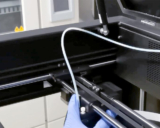
Do you regularly clean your 3D printers after purchasing them? How do you maintain them? In fact, the equipment is like our own bodies; proper maintenance and ...

As someone who has worked with FDM 3D printers for years—both for functional prototyping and end-use parts—ABS (Acrylonitrile Butadiene Styrene) has always ...

The question “What is the most profitable item to 3D print?” is one of the most common—and most misunderstood—questions in the 3D printing space. I’ve seen ...

By 2026, 3D printing has firmly established itself as more than a hobby or experimental technology. It is now an accessible manufacturing method that enables ...

Table of Contents Introduction: Why Gold and 3D Printing Fascinate People What Does “3D Printing Gold” Actually Mean? Is It Possible to 3D Print ...
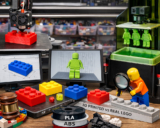
LEGO bricks have become one of the most iconic toys globally, celebrated for their durability, interlocking design, and endless creative possibilities. ...
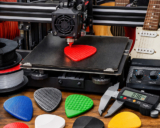
Guitar picks—also known as plectrums—are among the smallest yet most influential tools in a guitarist’s setup. A slight change in thickness, flexibility, or ...
3D printing has transformed how individuals, schools, and businesses approach manufacturing. What once required factories, tooling, and supply chains can now ...

Choosing the right 3D printer is no longer just about price or build volume. Today’s users expect speed, reliability, material flexibility, and minimal setup ...
- 1
- 2
- 3
- …
- 7
- Next Page »
User Deals: pixenib3d


Hornet Silksong 3D Print STL Files for Fans & Collectors
Original price was: $16.99.$11.04Current price is: $11.04. -35%


Batmobile 1989 – High-Detail 3D Printing Model
Original price was: $29.99.$19.79Current price is: $19.79. -34%

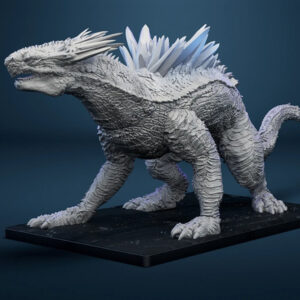
Shimo Kaiju 3D Printing Files – Epic Monster STL Download
Original price was: $24.99.$16.74Current price is: $16.74. -33%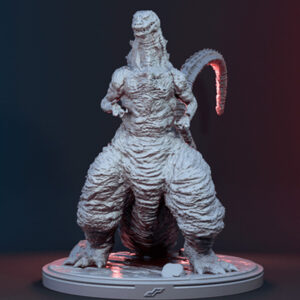
Shin Godzilla 3D Print Model | Detailed Kaiju STL Files
Original price was: $24.99.$16.74Current price is: $16.74. -33%


Great point, Johnson. While the hardware is excellent, the real standout is the combination of hardware, firmware, and software working seamlessly together. The slicing presets, cloud integration, and automatic calibration significantly reduce trial-and-error, which saves a lot of time in real-world use.
Thanks, Mark. The built-in carbon filter does a good job of reducing odors, especially for ABS. While no consumer printer can eliminate emissions entirely, the P1S is one of the better options for indoor use. Proper room ventilation is still recommended for frequent high-temperature printing.
Hi Emily, the AMS is generally very reliable, especially when using high-quality filament. In my experience, most issues come from brittle or poorly wound spools rather than the system itself. With proper filament storage and occasional cleaning, AMS runs smoothly even during long multi-color prints.
Great question, Jason. In long-term testing, the P1S handles high-speed printing very well thanks to its rigid CoreXY structure and active vibration compensation. As long as regular maintenance is performed—such as cleaning the nozzle and checking belts—there’s no noticeable drop in accuracy or reliability over time.