
In the world of tabletop gaming, model-making, and collectible figurines, the ability to bring imagination into physical form has never been more accessible. Whether you’re printing tiny Warhammer soldiers, fantasy characters, or highly detailed busts, choosing the best 3D printer for miniatures can be the difference between smooth perfection and disappointing layer lines.
As 3D printing technology continues to advance, 2026 marks a new era of ultra-high-resolution resin printers capable of capturing the tiniest facial features, armor textures, and intricate poses. These machines deliver professional-grade results that used to require industrial printers only a few years ago—now, they sit comfortably on your desktop.
This expert guide explores the top 3D printers for miniatures in 2026, analyzing real-world performance, strengths, and drawbacks. Beyond that, we’ll share buying tips, setup advice, and printing techniques to help you achieve stunning, paint-ready figurines—whether you’re a hobbyist or professional creator.
Why Choosing the Right 3D Printer for Miniatures Matters
Miniature printing is one of the most demanding applications of 3D printing. The scale is small, yet expectations for detail are sky-high. A 28 mm figurine might include intricate armor, facial expressions, or fabric folds—any of which can be ruined by insufficient resolution or mechanical wobble.
Unlike standard FDM (filament) printers, resin-based SLA and MSLA printers excel at printing miniatures because they can achieve extremely fine layer resolutions—often between 20 to 50 microns—while maintaining smooth surface finishes. The result is crisp, lifelike models that are ready for priming and painting right out of the wash and cure station.
So when choosing the best 3D printer for miniatures 2026, focus on factors that truly impact print quality and efficiency:
- Resolution (8K–14K) – Determines how much surface detail can be captured.
- Light source and screen uniformity – Ensures consistent exposure for each layer.
- Build volume – Defines how many miniatures you can print simultaneously.
- Ease of use – Features like auto-leveling, AI monitoring, and resin refill automation simplify the workflow.
- Software and connectivity – A reliable slicer, Wi-Fi control, and compatibility with open resins add flexibility.
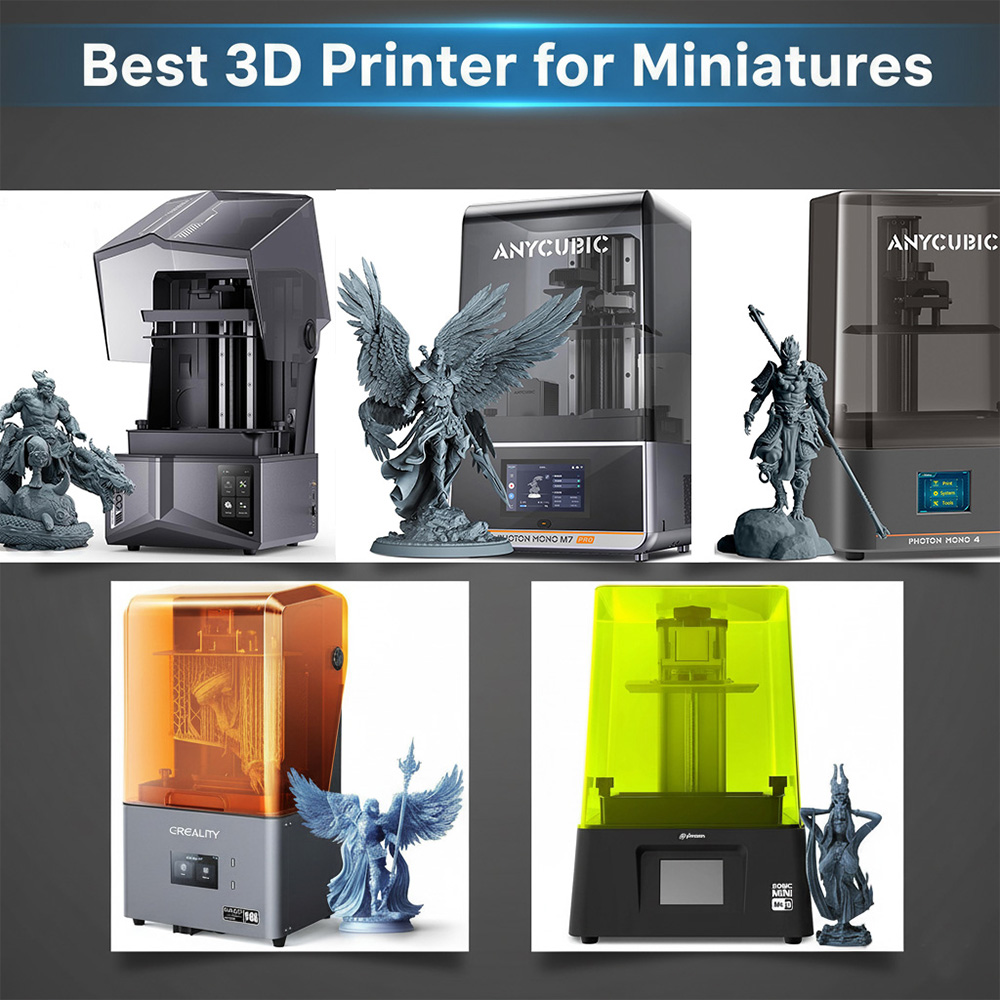
With those essentials in mind, let’s explore the five best 3D printers for miniatures and figurines you can buy right now.
Best 3D Printer for Miniatures in 2026

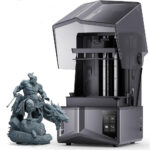
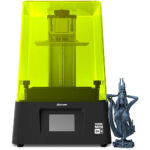
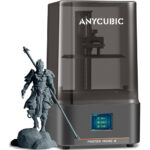
Anycubic Photon Mono M7 Pro — Professional Detail Meets Smart Automation
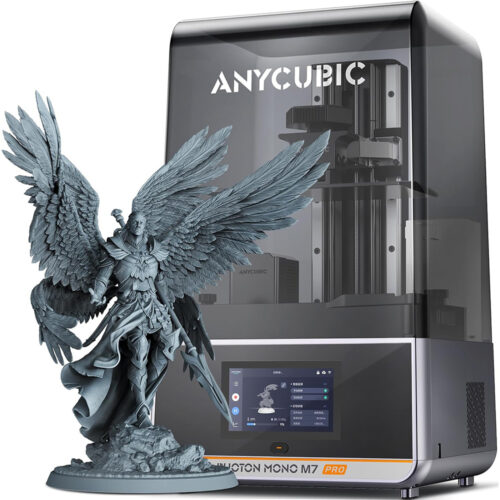
Anycubic Photon Mono M7 Pro
This printer combines fast printing speeds with consistent layer precision—making it a great balance of productivity and quality for serious creators.
Best for:
Miniature enthusiasts and professional modelers who want a large build plate and ultra-detailed results.
Creality HALOT-MAGE S 14K — Blending Speed, Resolution, and Clean Air
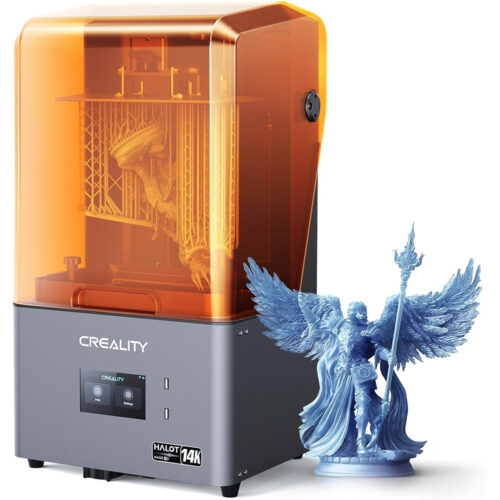
Creality HALOT Mage S 14K
Creality’s integrated HALOT OS and Wi-Fi connectivity make it user-friendly and ideal for creators who want convenience and speed without sacrificing quality.
Best for:
Hobbyists and designers looking for a high-resolution, plug-and-play resin printer with modern connectivity features.
Elegoo Saturn 4 Ultra — Balanced Power and Precision
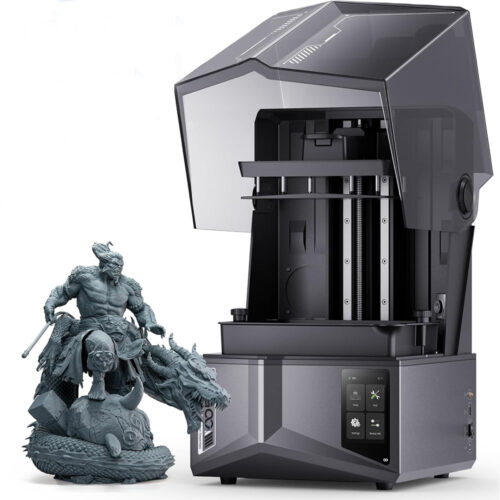
Elegoo Saturn 4 Ultra
It offers automatic resin feeding, active carbon filtration, and Wi-Fi file transfer, making it an all-around efficient and premium resin printer.
Best for:
Serious hobbyists and creators who need reliability, high speed, and professional-level detail.
Phrozen Sonic Mini 8K — Extreme Detail in a Compact Body

Phrozen Sonic Mini 8K S
Despite its compact footprint, it competes directly with larger and more expensive 3D printers in terms of print quality.
Best for:
Miniature painters, sculptors, and tabletop gamers who want museum-grade detail in a small form factor.
Anycubic Photon Mono 4 — High Resolution on a Budget
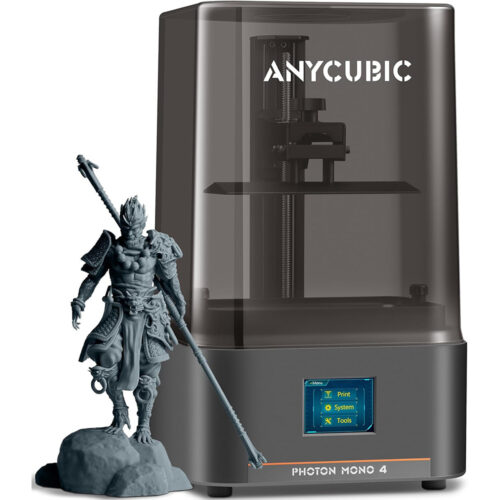
ANYCUBIC Photon Mono 4
It’s not the fastest or the largest, but its value-for-money ratio and consistent detail output make it a crowd favorite.
Best for:
Beginners and hobbyists who want a budget-friendly 3D printer for figurines without compromising detail.
Expert Buying Advice: How to Choose the Best 3D Printer for Miniatures
Choosing the right 3D printer for miniatures isn’t just about specs—it’s about matching your creative goals with the right technology. Below are expert tips from professional miniature artists and resin printing engineers:
1. Prioritize Resolution and Precision
Miniatures live and die by their details. A printer with at least 8K resolution ensures lifelike surface textures and clean edges on armor, skin, and tiny accessories. If budget allows, go for 12K or 14K for industry-leading fidelity.
2. Don’t Ignore Print Speed
High-speed printers like the Elegoo Saturn 4 Ultra or Anycubic M7 Pro use new release mechanisms that dramatically cut curing time. For batch printing or commercial projects, print speed equals productivity.
3. Consider Build Volume
If you print army sets, statues, or multiple models at once, a larger build volume is invaluable. The Photon Mono M7 Pro and Saturn 4 Ultra strike the perfect balance between scale and precision.
4. Look for a Reliable Ecosystem
Printer performance also depends on resin quality, slicer software, and customer support. Stick with brands like Anycubic, Elegoo, Creality, and Phrozen—they offer strong communities, firmware updates, and affordable replacement parts.
5. Budget Wisely
You don’t always need the priciest model. The Photon Mono 4 is proof that entry-level printers can achieve professional-looking miniatures with careful calibration and resin choice.
Pro Tips for Perfect Miniature Printing
Even with the best hardware, success depends on technique. Here’s what experienced miniature artists recommend:
- Choose high-detail resin: Use dedicated “miniature resin” or “ABS-like” resins for smooth finishes and crisp edges.
- Optimize exposure times: Every resin behaves differently—print exposure tests to avoid overcuring (loss of detail) or undercuring (soft edges).
- Position smartly: Angling models 30–45° reduces suction force and minimizes layer lines.
- Use supports carefully: Thin, well-placed supports prevent print marks while ensuring stability.
- Wash and cure thoroughly: Clean prints in isopropyl alcohol, then cure evenly to maintain structural integrity.
- Post-process for perfection: Sand lightly, prime with grey, and paint with thin coats to highlight micro details.
FAQ: Best 3D Printer for Miniatures
Q1: What type of 3D printer is best for miniatures—resin or FDM?
A: Resin printers (SLA/MSLA) are best for miniatures because they offer ultra-high resolution and smooth surfaces. FDM printers can’t match resin detail levels for small figurines.
Q2: How much resolution do I need for printing miniatures?
A: Look for at least 8K resolution for professional results. Higher resolution means crisper textures and better paint adhesion.
Q3: Is resin printing expensive?
A: Entry-level printers like the Anycubic Photon Mono 4 are affordable, but resin, gloves, cleaning supplies, and curing equipment add to the total cost. Still, it’s very reasonable for hobbyists.
Q4: Can I use water-washable resin?
A: Yes! Water-washable resins simplify cleanup and are ideal for home users. Just make sure prints are fully cured to prevent brittleness.
Q5: How can I avoid print failures with miniatures?
A: Level your build plate, ensure supports are properly placed, and use verified slicer settings. Stable exposure times and clean FEP films are key.
Q6: Which printer is best for beginners?
A: The Anycubic Photon Mono 4 is perfect for newcomers—it’s reliable, affordable, and delivers surprisingly high-quality detail.
Final Verdict: Finding Your Perfect Miniature Printer
If you crave museum-level detail and top-tier performance, the Phrozen Sonic Mini 8K and Anycubic Photon Mono M7 Pro lead the pack.
For a balance of speed, precision, and modern features, the Elegoo Saturn 4 Ultra and Creality HALOT-MAGE S 14K are excellent all-rounders.
And if you’re on a budget, the Photon Mono 4 gives you everything you need to start your miniature printing journey.
Whether you’re sculpting fantasy warriors, designing tabletop armies, or painting detailed figurines, each of these printers brings professional-grade performance to your creative space.