

LEGO bricks have become one of the most iconic toys globally, celebrated for their durability, interlocking design, and endless creative possibilities. However, whether due to missing pieces, the desire for custom designs, or prototyping, enthusiasts often ask: “Can I 3D print a LEGO piece?”
3D printing offers a unique solution for creating LEGO-compatible parts at home. Yet, producing accurate, safe, and functional pieces requires careful consideration of materials, printer types, design specifications, and legal boundaries. This article provides a detailed exploration of the technical, legal, and practical aspects of 3D printing LEGO pieces, ensuring enthusiasts and hobbyists can make informed decisions.
Table of Contents
- Understanding LEGO and 3D Printing
- Is It Possible to 3D Print LEGO Pieces?
- Legal and Copyright Considerations
- Choosing the Right Materials
- Creating Accurate LEGO Pieces
- Printing Techniques and Settings
- Practical Applications of 3D Printed LEGO Pieces
- Common Problems and Solutions
- FAQs About 3D Printing LEGO Pieces
- Conclusion
1.Understanding LEGO and 3D Printing
1.1 What Are LEGO Bricks?
LEGO bricks are precision-manufactured plastic components designed for secure interlocking. The most common LEGO bricks are made from ABS (Acrylonitrile Butadiene Styrene), a durable thermoplastic known for its strength, resistance, and slight flexibility.
Key features include:
- Stud-and-tube design: Ensures clutch power and consistent connections
- Dimensional accuracy: Variances are minimal to allow compatibility across sets
- Durability: ABS plastic withstands stress and repeated assembly
Understanding these properties is crucial for anyone attempting to replicate LEGO pieces through 3D printing.
1.2 Basics of 3D Printing
3D printing, or additive manufacturing, builds objects layer by layer from a digital model. There are multiple 3D printing technologies suitable for LEGO pieces:
- FDM (Fused Deposition Modeling): Extrudes thermoplastic filament layer by layer.
- Resin Printing (SLA/DLP): Uses liquid photopolymer resin cured by light for high precision.
The choice of technology impacts accuracy, strength, and surface finish of 3D printed LEGO pieces.
2.Is It Possible to 3D Print LEGO Pieces?
2.1 Technical Feasibility
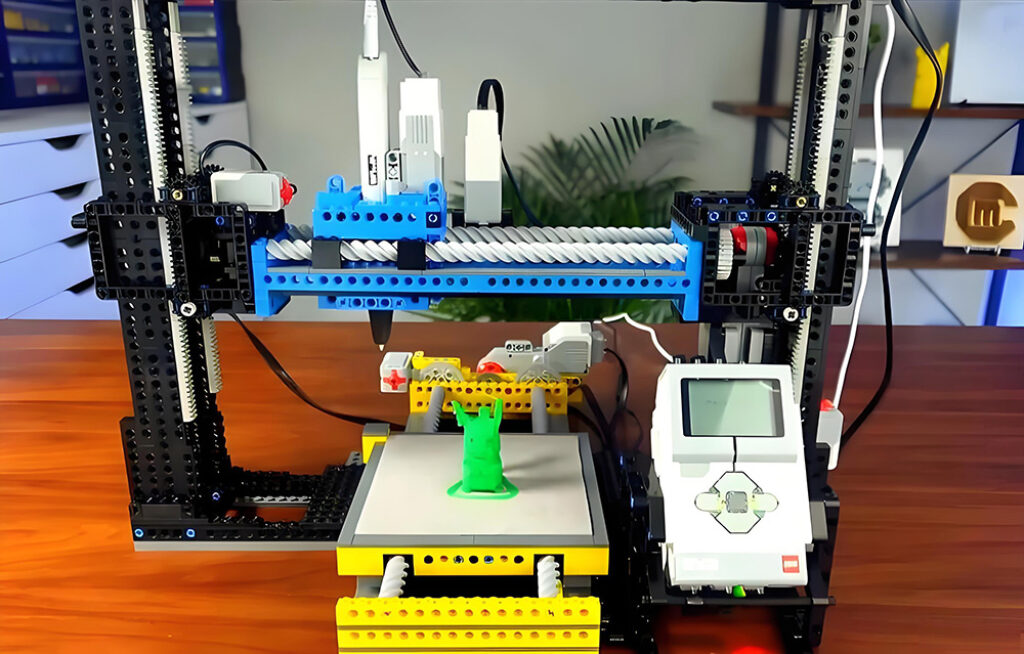
Yes, 3D printing LEGO pieces is technically possible. Modern 3D printers can achieve the dimensional precision required for LEGO bricks, especially when using high-quality filaments or resin. Factors affecting feasibility include:
- Printer resolution
- Material properties
- Dimensional tolerances
- STL model accuracy
2.2 Required Materials and Printers
To print LEGO pieces that function effectively, certain materials and printer types are recommended:
- PLA: Easy to print, but less durable and slightly brittle
- ABS: Closest to LEGO’s original material; durable and flexible
- PETG: Balances strength and flexibility, resistant to warping
- Resin: Provides fine detail and smooth surfaces, suitable for small or intricate pieces
High-resolution FDM printers or resin printers are preferred for achieving proper clutch power and compatibility.
2.3 Design Considerations
Creating LEGO pieces requires attention to:
- Exact dimensions and tolerances: Even 0.1 mm variation can affect fit
- Internal geometry: Tubes and studs must be accurate
- Weight distribution and flexibility: Critical for stability and clutch strength
3.Legal and Copyright Considerations
3.1 LEGO’s Intellectual Property
LEGO holds patents, trademarks, and copyrights covering its designs. While some patents have expired, LEGO’s trademark remains, meaning the brand and recognizable elements are protected.
3.2 Legal Uses of 3D Printed LEGO-Compatible Pieces
- Personal Use: Generally considered legal, especially if parts are not sold
- Commercial Use: Selling 3D printed LEGO parts may violate trademarks and intellectual property
- Custom Designs: Unique designs that do not infringe on LEGO branding are safer legally
3.3 Personal Use vs Commercial Use
Hobbyists can safely print replacement bricks or custom designs for personal collections. However, caution should be exercised if distributing or selling printed LEGO-compatible pieces, even online.
4.Choosing the Right Materials
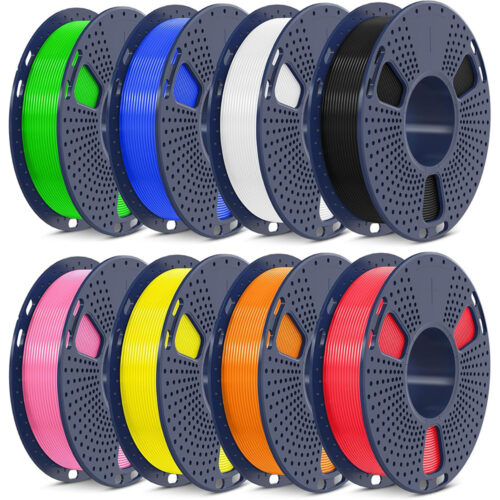
4.1 PLA
PLA is the most beginner-friendly material. It prints easily with low warping but is less durable than ABS. Suitable for:
- Small custom pieces
- Prototypes
- Educational projects
4.2 ABS
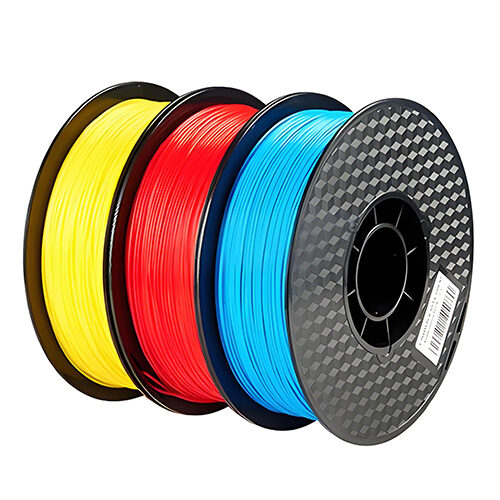
ABS closely mimics original LEGO bricks. Advantages include:
- High durability and slight flexibility
- Heat resistance
Challenges:
- Warping and strong odor during printing
- Requires a heated bed
4.3 PETG
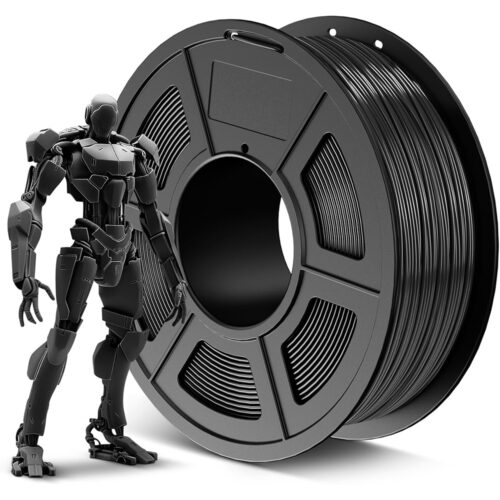
PETG combines the ease of PLA with the strength of ABS. Ideal for:
Functional bricks
Replacement pieces
Larger builds
4.4 Resin
Resin printing ensures high precision and excellent surface finish. Ideal for:
- Small, intricate LEGO pieces
- Custom minifigure parts
- Limited runs of bricks
5.Creating Accurate LEGO Pieces
5.1 Understanding LEGO Tolerances
LEGO bricks require tight tolerances to maintain clutch power. Common considerations include:
- Stud diameter: ~4.8 mm
- Tube diameter: ~4.9 mm
- Allowable clearance: 0.1 mm or less
5.2 CAD and STL Files
High-quality CAD models or STL files are crucial. Options include:
- Open-source LEGO STL libraries
- Custom CAD designs using software like Fusion 360 or Tinkercad
- Reverse-engineered models
5.3 Dimensional Accuracy
- FDM printers: Slight dimensional adjustments may be required for proper fit
- Resin printers: Higher dimensional fidelity; ideal for precise parts
6.Printing Techniques and Settings
6.1 FDM vs Resin Printing
- FDM: Affordable, suitable for larger bricks, may require post-processing
- Resin: High precision, best for small or complex parts
6.2 Layer Height and Infill
- Recommended layer height: 0.1–0.2 mm for FDM
- Infill: 100% for high-strength pieces, 50–70% for prototypes
- Orientation: Vertical printing of studs/tubes improves clutch power
6.3 Post-Processing Techniques
- Sanding and polishing for smooth surfaces
- Vapor smoothing for ABS parts
- Resin curing and washing for SLA prints
7.Practical Applications of 3D Printed LEGO Pieces
7.1 Replacement Parts
3D printing is an effective solution for replacing lost or broken bricks in sets, preventing the need to purchase full replacement sets.
7.2 Custom Builds and MOCs
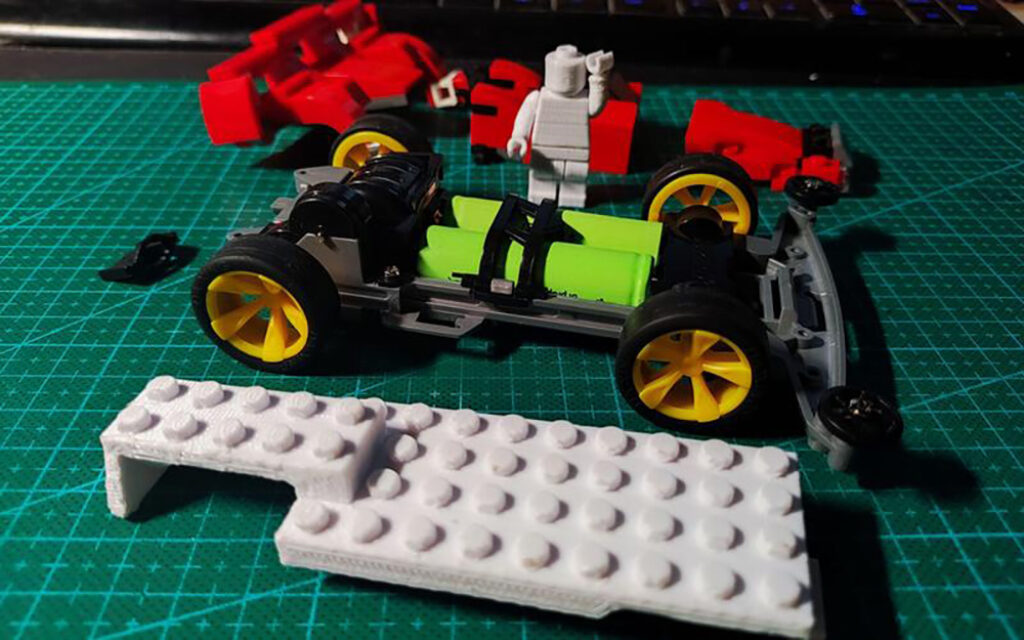
3D printed LEGO-compatible bricks allow creators to build unique structures or minifigures not available commercially.
7.3 Educational Use
Students and hobbyists can explore engineering concepts by designing and printing custom LEGO parts for learning and prototyping.
8.Common Problems and Solutions
8.1 Poor Fit and Clutch Power
Solution: Adjust print dimensions, increase accuracy, and test with a few bricks before large prints.
8.2 Fragility and Weak Parts
Solution: Use ABS or PETG, increase infill, or adjust layer orientation.
8.3 Printer Limitations
Solution: Use a high-resolution printer, especially for small studs and tubes.
9.FAQs About 3D Printing LEGO Pieces
Q1: Can I legally 3D print LEGO pieces for personal use?
A1: Yes, personal, non-commercial use is generally considered safe, provided you do not infringe LEGO trademarks.
Q2: Will 3D printed LEGO pieces fit with original LEGO bricks?
A2: With proper design, accurate tolerances, and high-resolution printing, 3D printed LEGO bricks can fit with original LEGO bricks.
Q3: What is the best material for 3D printing LEGO bricks?
A3: ABS is closest to original LEGO, PETG offers a good balance of strength and ease, and resin is ideal for small, precise pieces.
Q4: Can I sell 3D printed LEGO pieces?
A4: Selling LEGO-compatible pieces may violate intellectual property laws. Custom or original designs without LEGO branding are safer.
Q5: Can I print LEGO minifigure parts?
A5: Yes, resin printing works best for small, detailed parts, but check copyright considerations for official minifigure designs.
10. Conclusion
3D printing LEGO pieces is both technically feasible and practically useful, from replacing lost bricks to creating custom builds. Success depends on careful consideration of printer type, material, dimensional accuracy, and legal boundaries. By understanding LEGO’s design, tolerances, and intellectual property constraints, hobbyists can safely explore the world of 3D printed LEGO-compatible pieces, unlocking endless creative possibilities.
Whether for personal replacement parts, custom MOCs, or educational projects, 3D printing offers flexibility that LEGO enthusiasts can leverage while respecting copyright laws. With the right knowledge and tools, printing LEGO pieces at home can be a rewarding and highly creative experience.