Top 3D Printing Materials for Professionals & Hobbyists
Choosing the right 3D printing material is an important step for both professionals and hobbyists. The material you choose directly affects print quality, strength, durability, surface finish, and how the final part performs over time. With so many filaments and resins available today, understanding their basic characteristics and typical use cases can help you make better decisions and reduce unnecessary trial and error.
PLA: Easy to Use and Reliable for Beginners
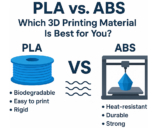
PLA (Polylactic Acid) is one of the most commonly used 3D printing materials, mainly because it is easy to work with and delivers consistent results. It prints at relatively low temperatures, shows minimal warping, and usually does not require a heated enclosure. These features make PLA a popular choice for beginners, schools, and everyday hobby printing.
PLA produces smooth surfaces and fine details, which makes it suitable for decorative models, display pieces, and early-stage prototypes. However, it is not designed for high-temperature environments or heavily loaded parts. For quick test prints or visual models where strength is not critical, PLA remains one of the most practical options.
ABS & PETG: Practical Materials for Functional Parts
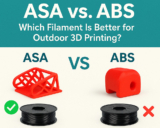
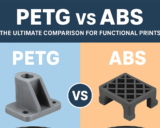
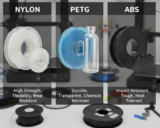
ABS (Acrylonitrile Butadiene Styrene) is known for its toughness and higher heat resistance, which is why it is often used for functional components, enclosures, and mechanical parts. Printing ABS typically requires higher temperatures and a more controlled environment to reduce warping and cracking.
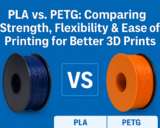
PETG offers a middle ground between PLA and ABS. It provides good strength, slight flexibility, and strong resistance to moisture and chemicals, while being easier to print than ABS in most setups. PETG is commonly used for containers, brackets, and outdoor parts. For users who need durability without dealing with strict enclosure requirements, PETG is often the more forgiving choice.
Nylon, TPU & Resin: Advanced Options for Specialized Applications
Materials such as nylon, TPU, and resin are usually chosen for more specific or demanding projects. Nylon is valued for its strength, wear resistance, and flexibility, making it suitable for gears, hinges, and other moving parts. TPU is a flexible filament used for rubber-like components, including phone cases, seals, and vibration-absorbing parts.
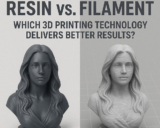
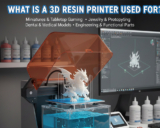
Resin materials, typically used with SLA and DLP printers, are known for their high level of detail and smooth surface finish. They are commonly used for miniatures, dental models, jewelry prototypes, and other applications where precision and surface quality are more important than impact strength.
How to Choose the Right 3D Printing Material
The right material depends on how the printed part will be used, the level of strength required, environmental conditions, and your printer’s capabilities. Hobbyists often focus on ease of printing and appearance, while professional users usually prioritize accuracy, durability, and performance. By understanding the strengths and limitations of each material, you can choose options that better match your projects and achieve more consistent printing results.
This Materials category is intended to help you compare common 3D printing materials and find those that fit your printer and project goals.
 pixenib3d