3D Printing Filaments Explained: Choose the Right Material for Every Project
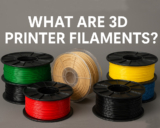
3D printing filaments are the foundation of every successful print. In real-world use, even small changes in material choice can lead to noticeable differences in strength, surface finish, durability, and long-term reliability. Over time, we’ve found that many printing issues—warping, weak layers, poor surface quality—are more often caused by material mismatch than by printer settings themselves.
This page focuses on the most commonly used filament types—PLA, ABS, PETG, TPU, and Carbon Fiber composites. Each material behaves differently during printing and performs differently once the part is finished. Understanding these differences makes it much easier to choose the right filament and avoid unnecessary trial and error.
PLA: Easy, Clean, and Beginner-Friendly
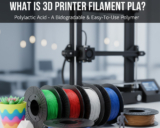
PLA (Polylactic Acid) is usually the first filament most people print with, and for good reason. It prints at relatively low temperatures, adheres well to the build plate, and produces clean surface details without demanding complex setup. For everyday models, visual prototypes, display pieces, and learning projects, PLA remains a dependable option.
That said, PLA is best suited for indoor use and low-stress parts. It doesn’t handle heat well, and it’s not designed for heavy mechanical loads. Even so, many users keep PLA as their “default” filament because it delivers consistent results with minimal effort.
ABS: Strong and Heat-Resistant for Functional Parts
ABS (Acrylonitrile Butadiene Styrene) is often chosen when strength and heat resistance matter more than print convenience. It’s commonly used for enclosures, tool housings, and functional components that need to withstand impact or moderate temperatures.
ABS does require more attention during printing. An enclosed printer, stable temperatures, and proper ventilation make a noticeable difference. In practice, many users struggle with ABS early on due to warping rather than material quality. Once printing conditions are controlled, ABS becomes a reliable choice for durable, real-world parts.
PETG: A Practical Balance Between Strength and Ease of Use
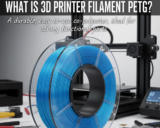
PETG sits comfortably between PLA and ABS in everyday use. It offers more toughness and flexibility than PLA while being easier to manage than ABS. PETG also resists moisture and common chemicals, which makes it suitable for outdoor parts, containers, and functional components that need long-term stability.
For users who find PLA too brittle but don’t want the setup demands of ABS, PETG often becomes the go-to solution. It’s a practical, forgiving material that works well across a wide range of applications.
TPU: Flexible Filament for Soft and Impact-Resistant Parts
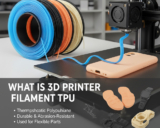
TPU (Thermoplastic Polyurethane) is designed for flexibility. It’s commonly used for parts that need to bend, compress, or absorb shock, such as phone cases, protective covers, gaskets, and grips.
Printing TPU requires slower speeds and careful extrusion control, especially on Bowden-style setups. The main challenge isn’t the material itself, but taking the time to tune settings properly. Once dialed in, TPU allows for designs that simply aren’t possible with rigid filaments.
Carbon Fiber Filaments: Lightweight Rigidity for Advanced Applications
Carbon Fiber filaments are composite materials, typically based on PLA, PETG, or Nylon and reinforced with chopped carbon fibers. The result is a filament that offers increased stiffness, reduced weight, and a clean, matte surface finish.
These materials are popular for structural parts, tools, and frames where rigidity is important. Because carbon fiber filaments are abrasive, using a hardened steel nozzle is strongly recommended to avoid excessive wear.
Choosing the Right Filament
Each filament category serves a specific purpose, and no single material is “best” for every project. PLA works well for fast, clean prints, ABS handles heat and impact, PETG balances strength and usability, TPU adds flexibility, and carbon fiber composites bring added stiffness for advanced builds.
By understanding how these materials behave during printing and in daily use, it becomes much easier to select the right filament and get consistent, reliable results from your 3D printer.

 pixenib3d