
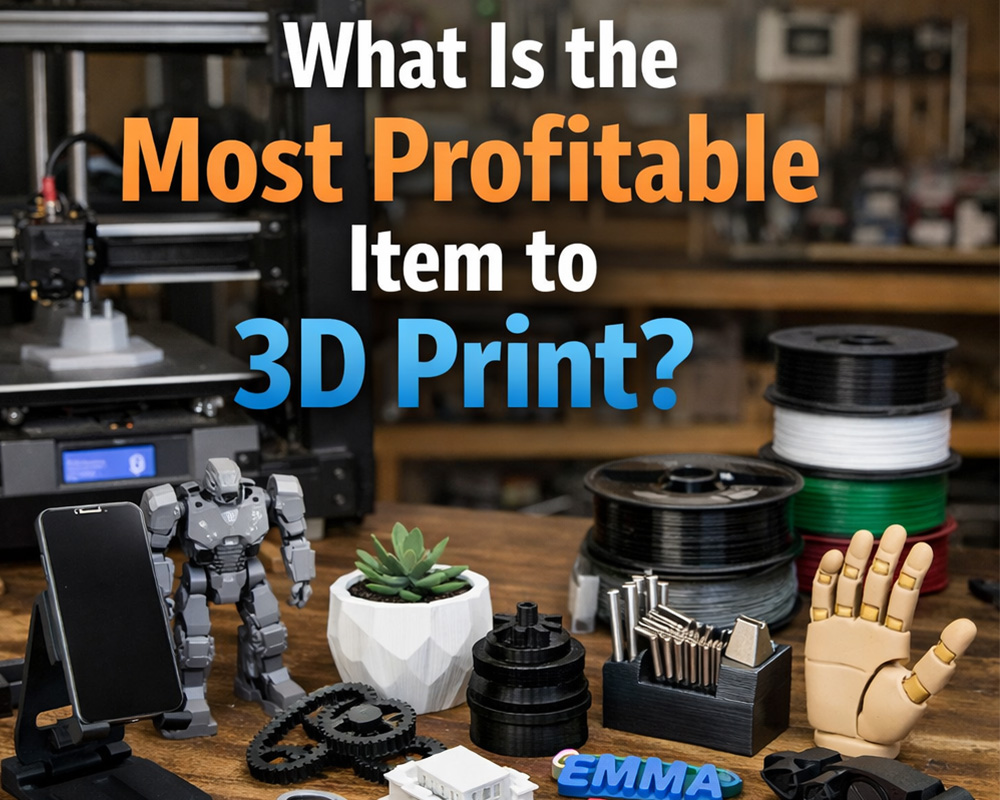
The question “What is the most profitable item to 3D print?” is one of the most common—and most misunderstood—questions in the 3D printing space. I’ve seen many beginners assume that profitability comes from printing flashy objects, complex models, or trending designs they spot on social media. But in my experience, the most profitable 3D printed items are often simple, functional, and even a bit boring to look at—yet they’re extremely valuable to the right customers.
Profit in 3D printing doesn’t hinge on owning the priciest machine or working with the most advanced materials. Instead, it comes down to understanding market demand, delivering problem-solving value, optimizing production efficiency, and nailing your pricing strategy. In this guide, I’ll break down what actually makes a 3D printed item profitable, which categories consistently yield the highest margins, and how to spot opportunities that others tend to overlook.
If your goal is to make money with 3D printers rather than just treating it as a hobby, this article will help you shift your mindset from a maker to a business owner.
What Does “Most Profitable” Really Mean in 3D Printing?
Before diving into specific products, I think it’s crucial to define what “profitable” actually means when you’re running a 3D printing business.
Profit Is Not Revenue
High sales volume doesn’t automatically translate to high profit. A product that sells for $10 but costs me $8 in materials, labor, electricity, failed prints, and platform fees is way less appealing than a product that sells for $30 and only costs $3 to produce.
True profitability, in my book, depends on these key factors:
- Material cost
- Print time
- Failure rate
- Post-processing labor
- Market price tolerance
- Customer acquisition cost
The most profitable items usually check these boxes: low material usage, short print times, and high perceived value.
Key Factors That Determine 3D Printing Profitability
Over time, I’ve identified four core factors that make or break the profitability of a 3D printed product.
1. Problem-Solving Value
I’ve found that products that solve a specific, real-world problem always outperform decorative items. Customers are more than willing to pay a premium when a product:
- Fixes something that’s broken
- Replaces a discontinued part that’s impossible to find elsewhere
- Improves efficiency or comfort in their daily lives
- Saves them time or money
A tiny functional component can often command a high price simply because there are no convenient alternatives available.
2. Customization and Personalization
Customization is one of 3D printing’s biggest advantages over mass manufacturing, and I leverage this to boost my margins. Personalized products let me:
- Charge higher prices than generic alternatives
- Stand out from the competition
- Create emotional value that resonates with customers
Adding names, adjusting sizes, ensuring compatibility with specific gear, or incorporating branding—these small tweaks can significantly increase a product’s profitability.
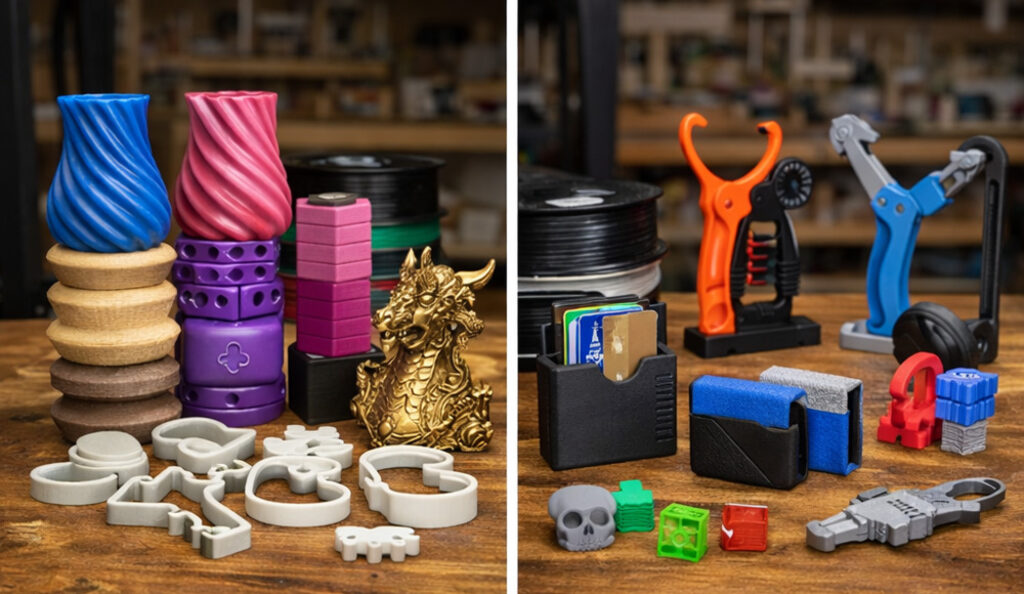
3. Niche Demand
Chasing mass-market products is a losing game, in my opinion—they attract way too much competition. The most profitable 3D printing businesses I’ve seen focus on niche markets with underserved needs, like:
- Specialized hobbies (think tabletop gaming or drone building)
- Professional tools for tradespeople
- Replacement parts for legacy equipment
- Regional or industry-specific accessories
Serving a smaller audience with a strong, unmet need is almost always more profitable than trying to please everyone with generic products.
4. Production Efficiency
A simple item that prints reliably, with minimal failures and little post-processing, will always beat a complex design—even if the selling price is lower. I’ve learned this the hard way: consistency equals scalability. Wasting time fixing failed prints or sanding down rough edges eats into profits fast, so I always prioritize designs that are easy to produce in bulk.
The Most Profitable Categories of 3D Printed Items
Instead of naming a single “magic product,” I think it’s more useful to highlight the product categories that consistently generate profit for my business and others in the industry.
1. Custom Replacement Parts (My Top Profit Category)
Hands down, custom replacement parts are the most profitable items I print. Here’s why:
- Original manufacturers often discontinue parts once a product is out of production
- Customers need these parts urgently—they’re willing to pay a premium to fix something instead of buying a brand-new item
- Competition is minimal, especially for obscure or older parts
- The parts are usually small, simple, and cheap to print, but they deliver massive value
Examples of parts I sell regularly:
- Appliance knobs and clips
- Furniture connectors and brackets
- Automotive interior clips
- Plastic hinges for old cabinets
- Components for legacy industrial equipment
I’ve printed parts that cost me $0.50 in materials and sold them for $15–$40. That’s the kind of margin that keeps a business running.
2. Functional Home and Office Accessories
Functional products that improve organization or ergonomics are steady sellers for me. They’re reliable, low-effort, and have universal demand. Here’s why they work:
- Everyone needs to tidy up cables, organize drawers, or elevate their monitors
- They use very little material, so my costs stay low
- They’re easy to customize (e.g., adjusting drawer divider sizes for specific cabinets)
- Customers prioritize practicality over aesthetics—they don’t care if it’s fancy, as long as it works
My best-selling items in this category:
- Cable organizers and cable clips
- Drawer dividers and shelf inserts
- Ergonomic monitor stands
- Under-desk hooks for bags or headphones
- Wall mounts for routers or smart speakers
These products also lead to repeat purchases—customers who buy a cable organizer often come back for a drawer divider later.
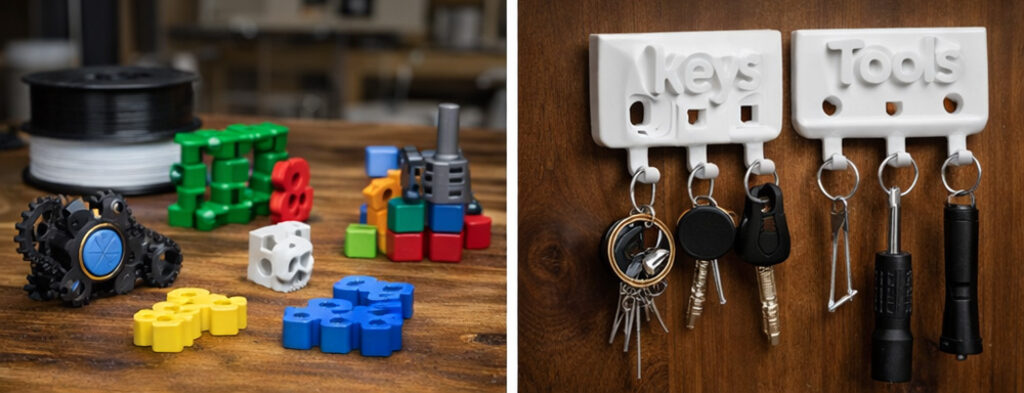
3. Personalized Gifts and Custom Name Products
Personalized items are some of my highest-margin sellers, especially around holidays and gift-giving seasons. The profit advantages are clear:
- Emotional value drives up perceived worth—customers don’t mind paying extra for a “one-of-a-kind” gift
- It’s hard for customers to compare prices, since each item is unique
- Seasonal demand (birthdays, anniversaries, Christmas) keeps sales consistent
- They’re perfect for gifting, which means customers are less price-sensitive
Examples of personalized products I offer:
- Custom name plaques for kids’ bedrooms
- Engraved key holders with family names
- Personalized desk accessories (like nameplates for office workers)
- Milestone gifts (e.g., “50th Birthday” planters or photo frames)
On average, customers pay 2–5 times the material cost just for the personalization. It’s a no-brainer.
4. Hobby and Niche Market Accessories
Hobbyists are passionate, and they’re willing to spend money on accessories that enhance their favorite pastimes. I’ve focused on a few key niches, and they’ve been incredibly profitable:
- Tabletop gaming (miniature organizers, dice towers, character stat holders)
- Photography (custom camera mounts for specific lenses, tripod adapters)
- Drones (propeller guards, battery holders)
- Mechanical keyboards (keycap pullers, custom wrist rests)
- Music equipment (guitar pick holders, microphone stands)
These items are optional enhancements, not necessities, but hobbyists value them highly. Margins are strong because the audience is loyal and knows exactly what they want.
5. Tools, Jigs, and Workshop Aids
Functional tools might not look impressive, but they’re workhorses for my business. Tradespeople and DIY enthusiasts are my main customers here, and they prioritize reliability over price. Here’s why these sell well:
- Professionals will pay for tools that save them time on the job
- The designs are simple, so print failures are rare
- Tradespeople often come back for bulk orders (e.g., a carpenter buying multiple drill guides for their team)
Examples of tools I print:
- Alignment jigs for woodworking
- Measuring guides for precise cuts
- Drill bit organizers
- Custom jigs for soldering or 3D printing itself
6. Pet Accessories
Pet owners are another great customer base—they’re emotionally invested in their furry friends and love personalized items. My top pet products include:
- Custom name tags that attach to collars
- Treat holders that dispense snacks when a pet presses a button
- Toy organizers to keep a home tidy
- Custom feeding bowls (adjusted for small or large breeds)
Durability and customization are key here. Pet owners don’t mind paying more for something that’s made specifically for their pet.
Items That Are Usually NOT Profitable
Knowing what not to print is just as important as knowing what to print. Over the years, I’ve wasted time and money on these low-profit categories:
- Generic figurines: Everyone prints them, so competition is fierce and prices are rock-bottom.
- Over-saturated novelty items: Think fidget spinners or pop culture trinkets—trends die fast, and you’ll be left with unsold inventory.
- Unlicensed fan art: This is a legal minefield, and even if you avoid getting sued, the margins are terrible because of high competition.
- Extremely long print-time objects: Printing a large statue that takes 20+ hours ties up your printer, which means you can’t print more profitable items in that time.
- Products requiring heavy post-processing: Sanding, painting, and assembling take hours—labor costs will eat into any profit you make.
Materials and Profit Margins
Material choice directly impacts my bottom line, so I stick to the most cost-effective options for most of my products. Here’s what I recommend:
- PLA: My go-to material. It’s cheap, easy to print, and works for most functional items and gifts. The failure rate is low, which saves me money.
- PETG: Slightly more expensive than PLA, but more durable. I use it for items that need to withstand wear and tear (like tool jigs or pet accessories).
- TPU: Great for flexible items (like phone cases or grip tape), but it’s trickier to print. I only use it for niche products where flexibility is a must.
Exotic filaments (like carbon fiber or metal-infused PLA) rarely justify their cost, in my experience. Unless a customer specifically requests them, they’re not worth the extra expense.
Pricing Strategy: Why Cheap Is Not Profitable
I see a lot of beginners underpricing their products, and it’s a mistake that kills businesses. When I set prices, I don’t just calculate material costs—I factor in everything:
- Design time (even if I modify an existing design, it takes time)
- Machine depreciation (printers wear out, so I allocate a portion of their cost to each product)
- Electricity (running a printer 24/7 adds up)
- Failed prints (I budget for a 10–15% failure rate)
- Platform fees (Etsy or eBay take a cut of every sale)
- Customer service time (answering questions, handling returns)
The most profitable way to price, in my opinion, is based on value—not cost. If a replacement part saves a customer $200 on a new appliance, they’ll happily pay $30 for it. Don’t sell yourself short by charging just a few dollars over material costs.
Platforms and Sales Channels
Choosing the right sales channel can make or break your profitability. Here’s how I approach it:
- Marketplaces (Etsy, eBay): Great for reaching a wide audience, but fees are high. I use these for personalized gifts and niche accessories.
- Direct-to-consumer website: Lower fees, and I can build a brand. I sell bulk orders of replacement parts and tools directly through my site.
- Local businesses: I partner with repair shops, hobby stores, and offices to supply them with custom parts and tools. B2B sales are reliable and have high margins.
- Social media: I post customer testimonials and behind-the-scenes content on Instagram and TikTok to drive traffic to my website. It’s free marketing, and it builds trust.
Scaling Profit Without More Printers
You don’t need to buy a dozen printers to scale your profits. I’ve grown my business by focusing on efficiency, not volume:
- Standardize designs: I create templates for personalized items (like name plaques) so I can tweak them quickly instead of designing from scratch.
- Reduce print failures: I test every design thoroughly before selling it, and I use high-quality filament to minimize jams and warping.
- Improve listing quality: Good photos and clear descriptions reduce customer questions and returns. I invest time in making my listings stand out.
- Offer bundles: I sell “desk organization kits” (cable clip + monitor stand + drawer divider) for a higher price than individual items. Bundles increase average order value.
- Increase customization fees: I charge extra for complex modifications (like custom sizes or logos). It’s a simple way to boost margins without extra work.
Legal and Ethical Considerations
Profit doesn’t mean cutting corners—you have to play by the rules. I’ve learned to avoid these pitfalls:
- Copyrighted characters: Printing unlicensed Disney or Marvel figurines is illegal. Don’t risk a lawsuit just for a quick sale.
- Trademarked logos: I don’t print products with brand logos (like Nike or Apple) unless I have permission.
- Patent-infringing designs: I research existing patents before selling a product to make sure I’m not copying someone else’s idea.
Original designs and functional parts are safer in the long run. They also help you build a unique brand that customers will remember.
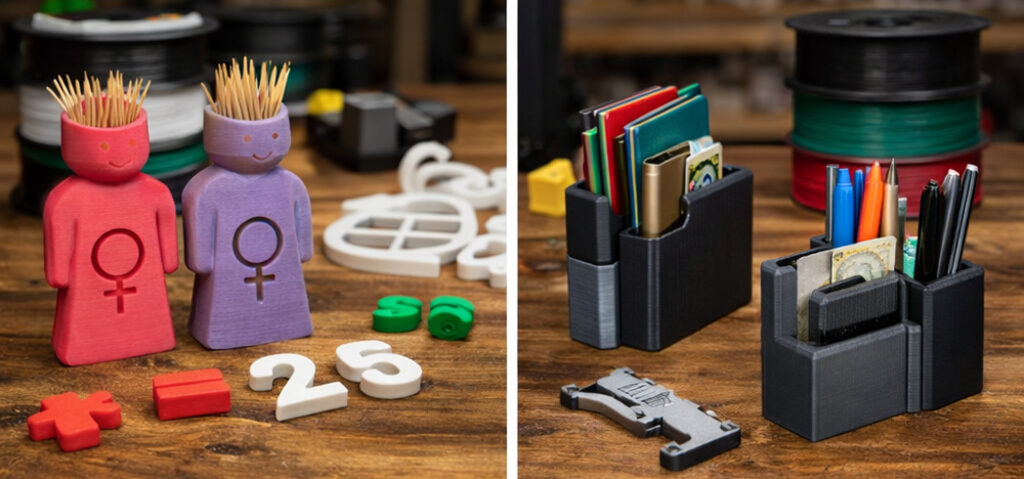
The Role of Design in Profitability
You don’t need to be a professional designer to succeed, but basic design skills will take your business far. I learned how to use free software like Tinkercad to modify existing designs, and it’s been a game-changer. Small improvements—like making a replacement part fit better or adding a non-slip grip to a tool—can justify higher prices and make your products stand out from the competition.
Long-Term Profit Strategy
The most successful 3D printing businesses I’ve seen don’t rely on viral products—they build sustainable income by focusing on these things:
- Repeat customers: I offer discounts to returning buyers and send email newsletters with new product updates. Repeat customers are cheaper to acquire than new ones.
- Niche authority: I’ve become known for my custom replacement parts for vintage appliances. Customers seek me out because they know I’m an expert in that niche.
- Brand trust: I ship orders quickly, offer a satisfaction guarantee, and respond to customer questions promptly. Trust leads to positive reviews and word-of-mouth referrals.
- Product ecosystems: I create products that complement each other (e.g., a cable organizer + a monitor stand + a keyboard wrist rest). It encourages customers to buy more than one item at a time.
Frequently Asked Questions (FAQs)
I get asked these questions all the time, so I’ll answer them from my own experience:
Q: What is the single most profitable item to 3D print?
A: There’s no one-size-fits-all answer, but custom replacement parts consistently offer the highest margins. The urgency, low competition, and high value make them unbeatable.
Q: Can you realistically make a living with 3D printing?
A: Yes— but not by printing random models. I make a full-time income by specializing in niche replacement parts and functional accessories. Sustainable income comes from niche focus, original designs, and efficient operations.
Q: Is 3D printing still profitable in 2026?
A: Absolutely. Competition has increased, but demand for customization, localized manufacturing, and short-run production is growing. Customers still need solutions that mass manufacturing can’t provide.
Q: How much profit can one 3D printer generate?
A: It depends on what you print and how you price it, but a well-utilized printer can generate $500–$5,000 per month. I’ve seen some businesses make even more by focusing on high-margin parts.
Q: Do I need advanced printers to be profitable?
A: No. I started with a basic $200 3D printer, and I still use it for most of my products. Many profitable items (like replacement parts or cable clips) don’t require fancy features.
Q: Are digital design skills required?
A: They’re not mandatory—you can use free designs from sites like Thingiverse—but learning basic design or modification skills will significantly increase your profitability. It lets you create unique products that no one else is selling.
Conclusion: Profit Comes From Strategy, Not the Printer
At the end of the day, the most profitable item to 3D print isn’t a single object—it’s a category of solutions built around real customer needs. Replacement parts, functional accessories, customized products, and niche tools consistently outperform decorative prints and trend-driven designs.
Success in 3D printing isn’t about printing more things—it’s about printing the right things, for the right people, at the right price. When you approach it with a business mindset instead of a maker mindset, 3D printing is one of the most flexible and accessible ways to build a scalable, profitable business.